
NEWSLETTER - JULY 2026

Expert Tip of the Month
With pending sales at a four-year high, luxury activity surging, and affordability improving for the 19th time in 22 months, July 2026 offers Houston buyers and sellers one of the most data-supported entry points of the year.
As Houston moves into the heart of summer, the market's forward-looking indicators are unmistakably constructive. According to the Houston Association of Realtors (HAR), pending single-family home sales climbed 5.8% year over year in May to 9,172 contracts — the strongest contract volume since May 2022. That surge in buyer commitment, occurring alongside a modest dip in closed sales, signals one clear conclusion: demand is not retreating — it is accelerating through the pipeline. (HAR.com)
Mortgage rates are reinforcing that momentum. According to Freddie Mac, the average 30-year fixed rate fell to 6.44% in May 2026, down from 6.82% a year ago — translating to more than $60 per month in principal and interest savings for a buyer purchasing at Houston's median price with a standard 20% down payment. Houston housing affordability has now improved in 19 of the past 22 months, a streak that is steadily drawing buyers back into the market across all price tiers. (HAR.com)
Arash Asgharian, your trusted real estate broker in Houston, emphasizes that July sits at the productive intersection of summer urgency and fall preparation. "The buyers who act ahead of August school-year deadlines — and the sellers who list now, before the traditional late-summer slowdown — are the ones who will look back and call this timing right."
Market Overview:
June Snapshot
A surge in pending sales and continued luxury leadership define June's market story — signaling momentum even as overall closings pace shows measured moderation.
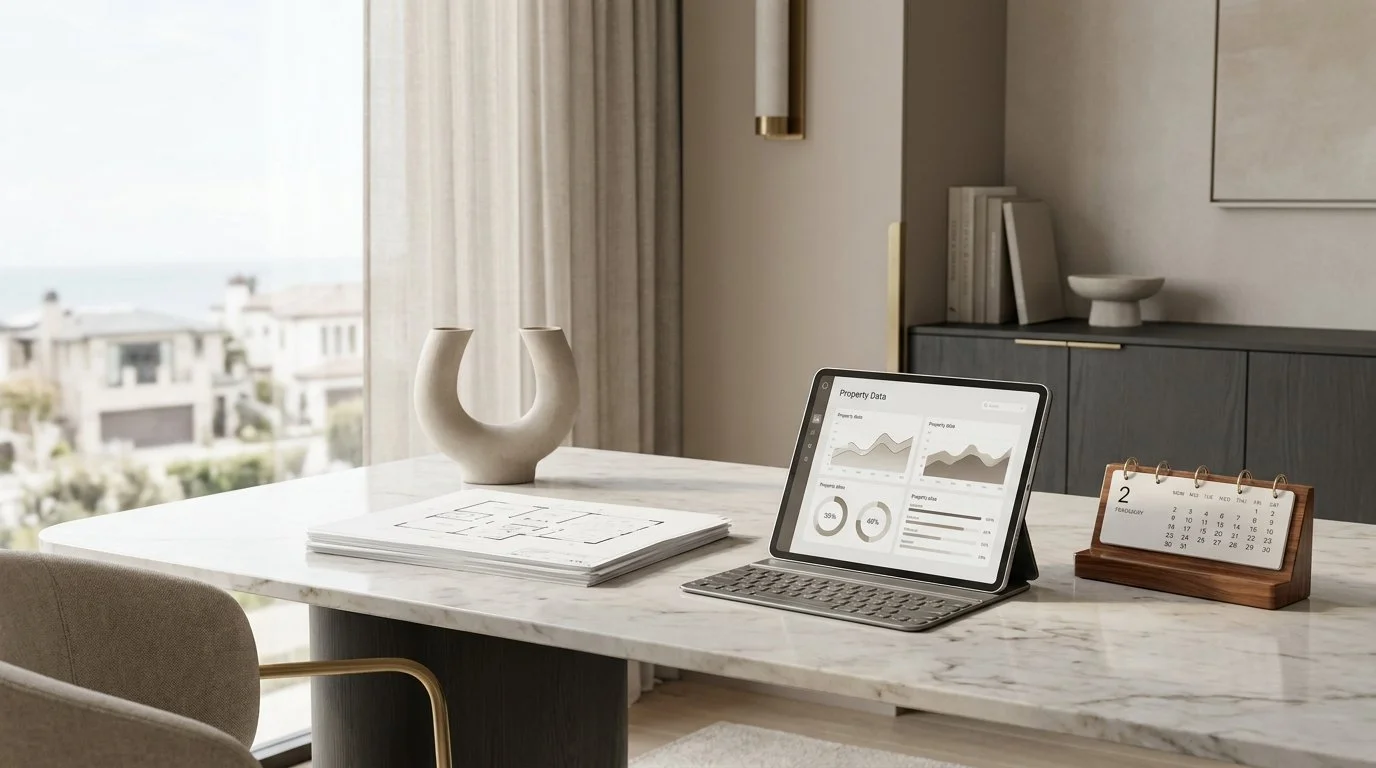
The most recent HAR data, reflecting May 2026 activity, tells a tale of two metrics: closing volume moderated while contract activity surged. Total property sales across Greater Houston came in at 10,088 — down 3.1% year over year — with single-family closings easing 3.2% to 8,631 homes. Yet beneath those headline numbers lies a far more optimistic signal: pending sales rose 5.8% year over year to 9,172 — the highest May contract level since 2022. That divergence is not a contradiction; it is a leading indicator. (HAR.com)
Pricing delivered an equally nuanced story. The median single-family price held flat at $340,000 — a sign of market stability protecting seller equity — while the average price rose 2.3% to $447,301, its highest point since June 2025, driven by a 10.1% surge in luxury home sales ($1M+). Total dollar volume reached $4.3 billion. Active single-family listings totaled 37,619 — up 2.4% year over year — while months of inventory held steady at 5.1, above the national average of 4.4 months. Days on Market moved from 51 to 54 days, reflecting buyers' increased appetite for thoughtful evaluation in a well-supplied market. (HAR.com)
"When more buyers are signing contracts than closings reflect, that energy is moving through the pipeline — not evaporating," says Arash Asgharian. "The pending numbers are the real story heading into summer, and they tell us the market is building, not stalling."
Buying Trends:
Luxury Surges, Entry-Level Holds
From first-time buyers to high-net-worth purchasers, Houston's July buyer landscape spans a wide spectrum — each segment finding distinct opportunity in today's conditions.
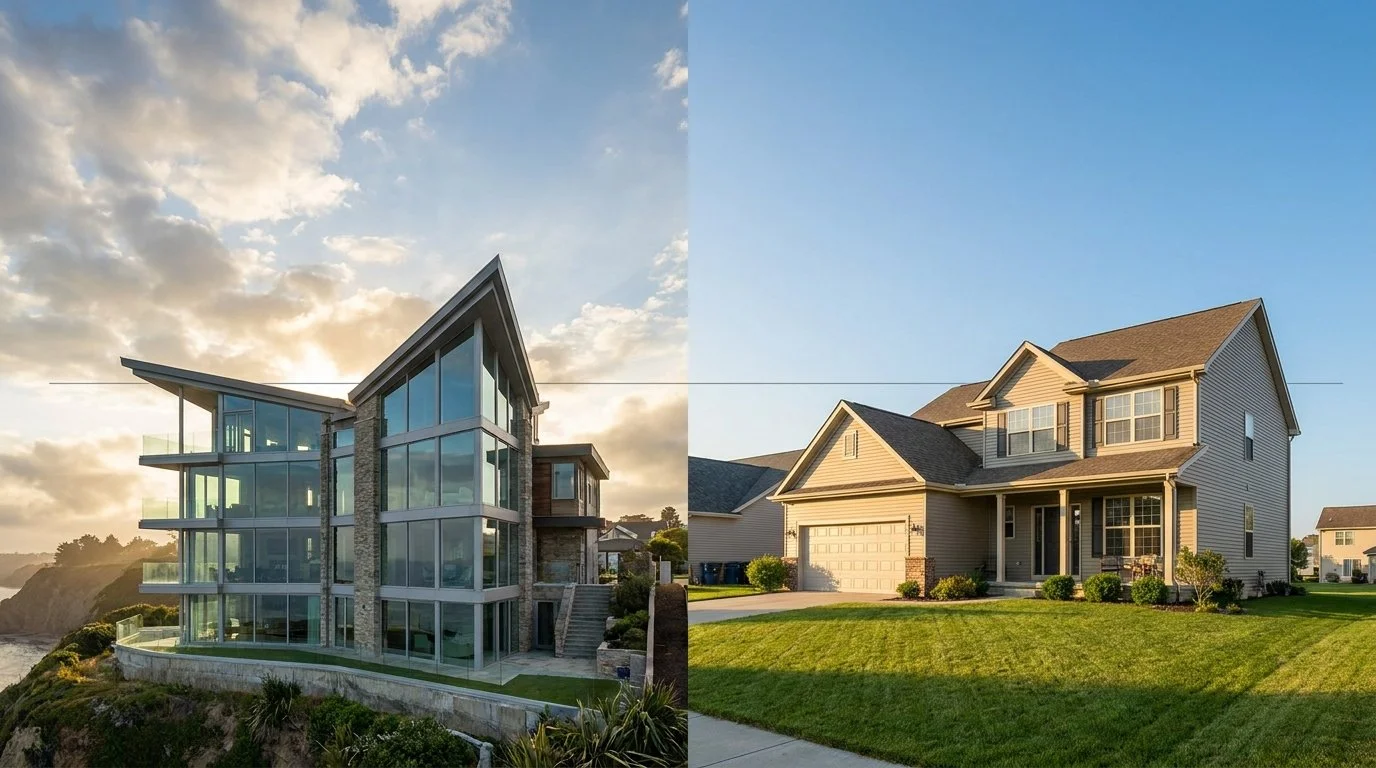
July's buyer landscape mirrors the bifurcation visible throughout 2026. At the top end, luxury buyers drove a 10.1% year-over-year increase in the $1M+ segment — 481 transactions closed in May alone — demonstrating that high-net-worth buyers are actively deploying capital into Houston real estate with conviction. Meanwhile, the $150,000–$249,999 segment posted a 2.7% increase, confirming that entry-level and first-time buyers remain engaged, not waiting on the sidelines. (HAR.com)
The $250,000–$499,999 range — which accounts for the largest share of Houston transactions — saw an 8.0% year-over-year decline, reflecting both rate sensitivity and elevated buyer selectivity at the market's most competitive price tier. For buyers shopping in this range, July calls for a disciplined approach: pre-approval secured before touring, objective criteria clearly defined, and readiness to move decisively when the right property appears. Well-priced homes in this segment still attract serious attention quickly.
Arash Asgharian advises buyers across all segments to treat this window seriously. "Inventory is healthy, rates are the lowest in over two years, and sellers are realistic. That combination doesn't last forever — and the buyers moving now are the ones who'll have the least regret when they look back from 2027."
Selling Highlights:
Prepared Sellers Win More
With 5.1 months of active supply on the market and Days on Market at 54, sellers who enter July with precise pricing and professional presentation are consistently achieving strong outcomes.
Summer selling in 2026 calls for a clear-eyed view of what has changed in the market — and what has not. What has not changed: buyer demand is real, active, and increasingly contract-ready — 9,172 pending sales in May prove it. What has changed: buyers are comparing more options, spending more time evaluating, and showing far less tolerance for inflated pricing or under-prepared presentations. A 54-day average Days on Market reflects this recalibration, compared to 51 days a year ago. (HAR.com)
There is meaningful good news for sellers who enter the market prepared: the average single-family price has risen to $447,301 — a 2.3% year-over-year gain and the highest average since June 2025. Seller equity is well-protected for those who price accurately. The sellers achieving the strongest July outcomes are uniformly committed to three disciplines: pricing anchored to verified closed comparables from the past six months, professional photography and stagingexecuted before day one, and showing flexibility that gives maximum buyer access during Houston's peak summer traffic window.
"The market will reward the seller who prepares thoroughly and prices honestly far more than the one who tests high and adjusts down," Arash Asgharian says. "Buyers notice when a home has been sitting — and the perception of that carries a price."
Rental Market Update:
Summer Renter Demand Peaks
Single-family leases rose 5.2% year over year in May, with townhome and condo leases up 8.2% — and Zillow confirms 9,758 available rentals with a "Warm" market temperature heading into July 2026.
Houston's rental market delivered a strong May performance. According to the HAR May 2026 Rental Market Update (released June 17, 2026), single-family leased listings totaled 4,849 — a 5.2% year-over-year increase — with an average lease price of $2,346, virtually unchanged from a year ago. That combination of rising volume and stable pricing reflects a rental environment where demand is genuine, supply is healthy, and neither runaway escalation nor distress characterize the market. (HAR.com)
The townhome and condominium rental segment reinforced that momentum, with leased listings rising 8.2% year over year to 749 properties and the average lease price edging up 0.5% to $2,007. HAR Chair Theresa Hill noted that "a growing supply of available homes is providing more choices and helping keep rental prices relatively stable" for renters who are actively making decisions in today's economy.
According to Zillow Rentals (updated June 23, 2026), the average rent across all Houston property types stands at $1,885 per month — up $35 year over year and $6 month over month — with 9,758 available rental units citywide. Houston remains approximately 6% below the national average of $2,009, reinforcing its standing as one of the most competitively priced large rental markets in the country. Market temperature is rated "Warm." By bedroom type, current averages break down as follows: studios at $1,255, one-bedrooms at $1,162, two-bedrooms at $1,500, and three-bedrooms at $2,100 per month. (Zillow.com)
Arash Asgharian notes that for investors, the confluence of rising leasing activity and stable pricing creates a dependable income foundation. "In a market where tenants are actively choosing to stay in Houston rentals, the fundamentals for landlords are as sound as they've been in years. Quality of the rental experience — condition, responsiveness, and lease flexibility — is what separates the landlords winning tenants from those who aren't."
Neighborhood Spotlight:
Montrose: Culture & Demand
Montrose continues to command premium interest from buyers, renters, and investors in 2026 — a neighborhood where lifestyle infrastructure and property durability reinforce each other year after year.
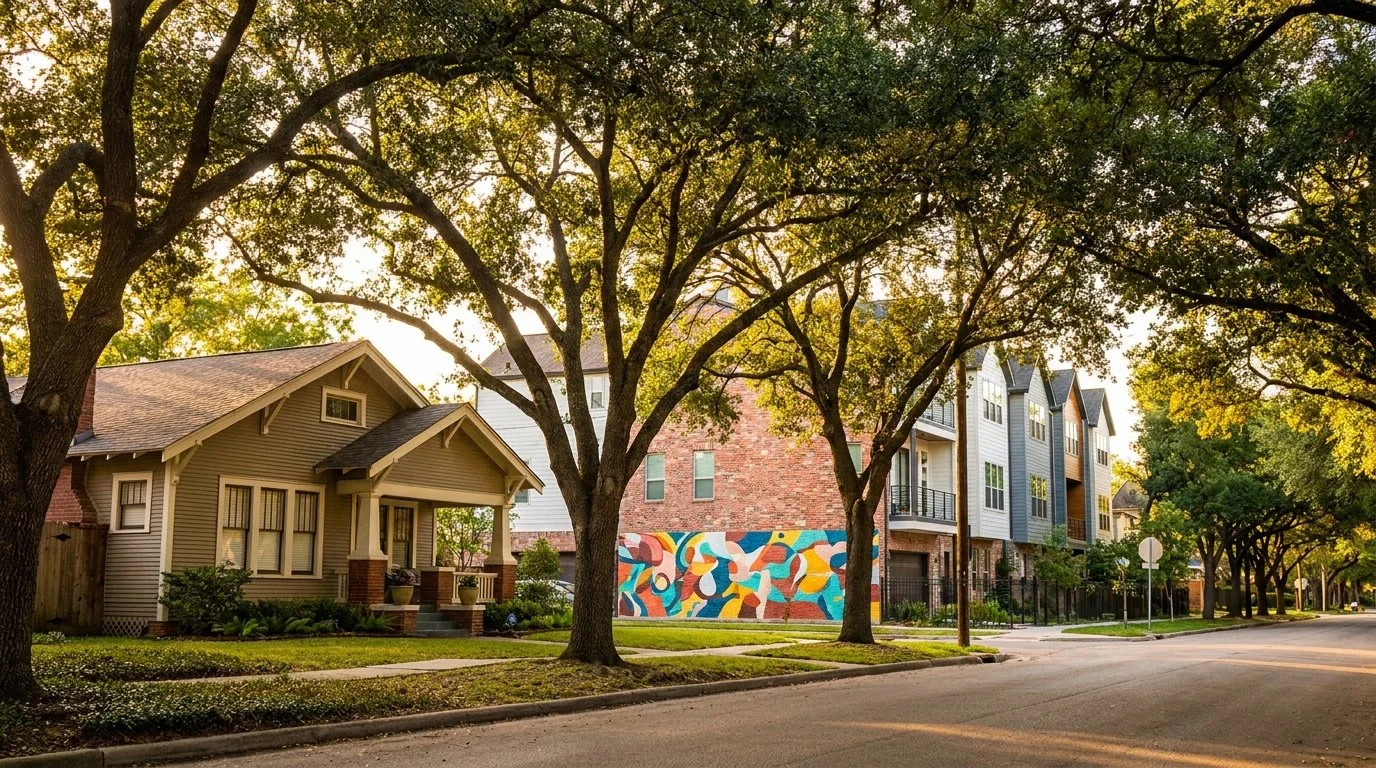
If The Heights represents Houston's Victorian-era charm, Montrose is its creative and cultural heart. Nestled between the Museum District, Midtown, and River Oaks, Montrose offers one of the city's richest concentrations of lifestyle assets per square mile — independent restaurants, art galleries, yoga studios, green corridors, and a walkability score that few Houston neighborhoods can match. In 2026, it remains one of the most consistently in-demand inner-loop addresses for buyers and renters at virtually every price point.
For renters, the 77006 corridor delivers diversity of housing stock that mirrors the neighborhood's personality — from compact urban apartments and historic bungalows to newer luxury townhomes — with the average rent significantly higher than the city-wide median, reflecting the sustained premium the neighborhood commands. Its proximity to the Texas Medical Center, downtown, and the Greenway Plaza corridor makes Montrose an especially attractive address for professionals prioritizing commute efficiency alongside lifestyle access.
For buyers and long-term investors, Montrose's durability argument is compelling: neighborhoods built around genuine cultural infrastructure, consistent pedestrian activity, and multiple employment center access tend to hold value through market cycles better than purely residential alternatives. The continued pace of new townhome construction along key Montrose corridors reflects developer confidence in sustained demand — a signal worth noting for any investor evaluating long-term Houston real estate exposure.
Arash Asgharian identifies Montrose as one of his field-tested recommendations for buyers seeking both lifestyle alignment and price stability. "Montrose doesn't go in and out of fashion. It's one of Houston's most enduring value propositions, and in a balanced market, that kind of consistency is exactly what long-term buyers should be anchoring to."
Local Insight:
Smart Moves for July
In a market running on multiple tracks simultaneously, July 2026 demands segment-specific strategy — not a single narrative that fits every situation.
July in Houston's real estate market rarely moves in one direction. For buyers, the most important data point this month isn't the closed sales number — it's the pending sales figure. With 9,172 contracts signed in May, the buyer pool is larger and more active than it has been since 2022. Waiting for a "better moment" in August or September means competing with that pipeline when it converts to closed buyers re-entering the market. Arash Asgharian's recommendation: get fully pre-approved before touring, know exactly which objective criteria are non-negotiable, and be ready to move decisively when those criteria are met.
For sellers, July delivers peak organic showing demand — longer days, active corporate relocation cycles, and families with hard school-year deadlines generate Houston's highest buyer foot traffic of the year. But this summer urgency is not unconditional. Buyers have 37,619 single-family active listings to choose from, and they are exercising real comparison discipline. Professional photography, accurate pricing, and a first-weekend listing debut that captures digital traffic are the tools that capture July's demand surge — not assumptions that summer will absorb any price or any presentation.
For investors, one macro tailwind worth tracking: Congress recently passed the 21st Century ROAD to Housing Act — described as the most significant federal housing legislation in decades — which directs meaningful resources toward housing development and affordability nationally. Cities like Houston, with existing construction infrastructure, workforce capacity, and long-term population growth, are positioned to benefit from this policy cycle over the coming years. "Federal housing capital tends to flow toward cities that can put it to work quickly," Arash Asgharian notes. "Houston checks every box."
Q & A:
Ask the Experts
Q: Sales are down year over year in May, but I keep reading that Houston's market is strong. Is the optimism justified, or is it spin?
A: The optimism is justified — but it requires reading the data correctly. Closed sales figures reflect decisions made 30 to 60 days earlier; they are the market's rearview mirror. Pending sales — contracts signed right now — are the windshield. When pending activity surges 5.8% year over year to a four-year high of 9,172 simultaneously with a 10.1% jump in luxury transactions, and at a moment when mortgage affordability has improved in 19 of the past 22 months, the market's underlying direction is clearly constructive. (HAR.com)
The modest dip in closings reflects 2025's more cautious buyer pool making its final decisions — not 2026's growing buyer pool, which is actively signing contracts at their fastest pace in years. Stack that against a median price that has held flat at $340,000 (protecting seller equity without pricing out buyers), rates at 6.44% versus 6.82% a year ago, and a Houston rental market with 5.2% leasing growth — and the full picture emerges: this is a market that is maturing and strengthening simultaneously.
Arash Asgharian summarizes it plainly: "The numbers that predict where Houston is going — pending sales, affordability improvement, leasing growth — are all pointing in the same direction. The buyers and sellers acting on those numbers, rather than old headlines, are the ones best positioned for the second half of 2026."
Looking Ahead:
August & Beyond
With the summer pipeline filling, inventory stabilizing, and a federal housing investment tailwind emerging, Greater Houston's market is positioned to close 2026 on a strong note.
The trajectory heading into August could hardly be more readable. Houston's pending sales pipeline is the fullest it has been since 2022. Mortgage rates have declined year over year for 19 consecutive months in terms of purchasing power impact. The rental market is posting multi-segment leasing gains with stable pricing. And a balancing inventory picture — 5.1 months, moderating from earlier growth peaks — signals that buyer advantage is remaining, but gradually normalizing rather than expanding further. (HAR.com)
If inflation data continues to cooperate and the Federal Reserve sustains its measured policy posture, additional rate easing in Q3 and Q4 could convert a meaningful segment of sitting renters into active buyers — particularly in the $250,000–$500,000 range where rate sensitivity is highest and the largest volume of Houston transactions happens. That potential wave of demand, meeting a market with seasoned sellers and realistic pricing, sets up a fall Houston market that could be among the most active in recent years.
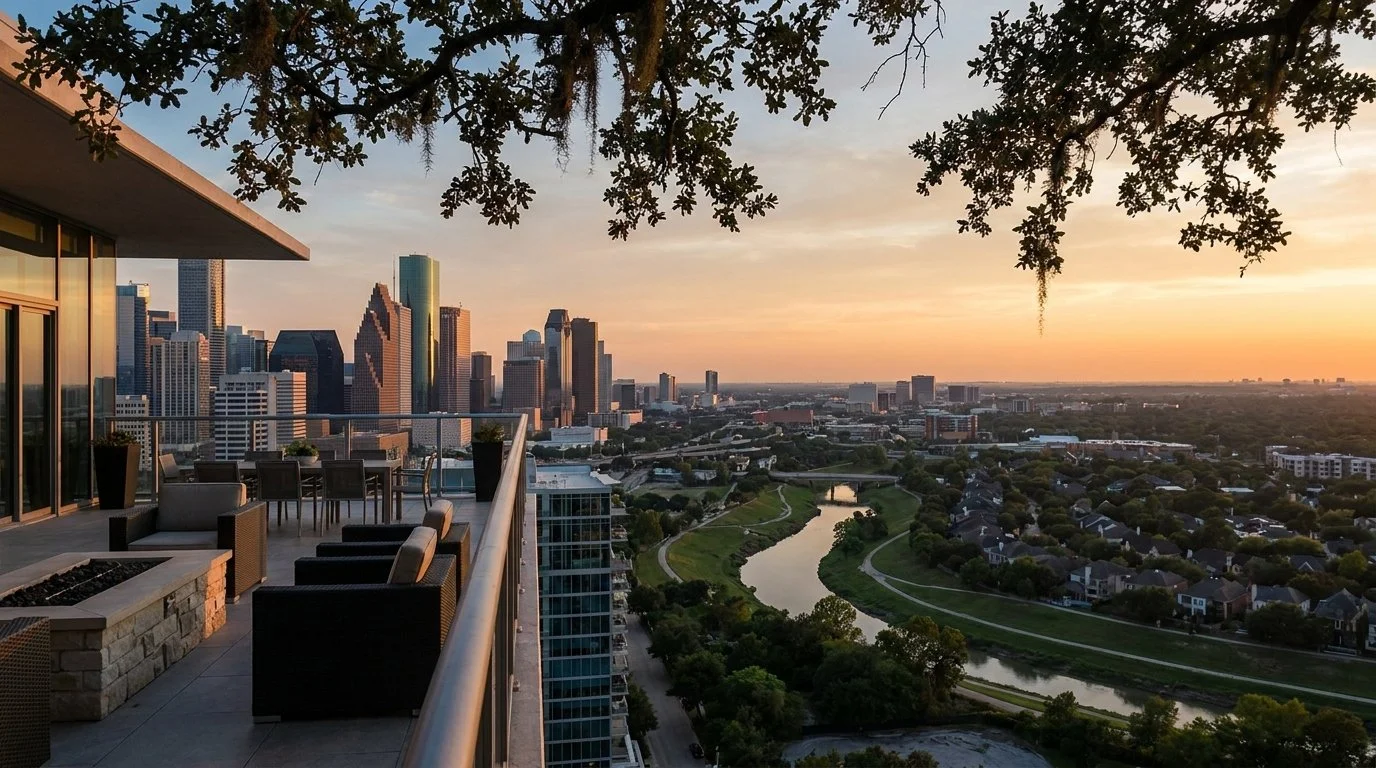
Suburban communities — Katy, Sugar Land, The Woodlands, Pearland, Friendswood — will continue drawing relocating buyers, corporate transferees, and value-seeking families through the second half. Inner Loop neighborhoods, from Montrose and Midtown to EaDo and the Medical Center corridor, will continue attracting buyers and renters seeking walkability, cultural density, and proximity to major employment nodes. Arash Asgharian's message heading into August is clear: "Houston's fundamentals haven't changed — job growth, in-migration, relative affordability — but the opportunity window is most open right now. Prepared buyers and sellers who engage with current data will look back on this period as the moment they made the right call."
